

This site is no longer active!
If you are the owner, you must reactive this site for it to be published again
or contact us at support@rebolthq.com

If you are the owner, you must reactive this site for it to be published again
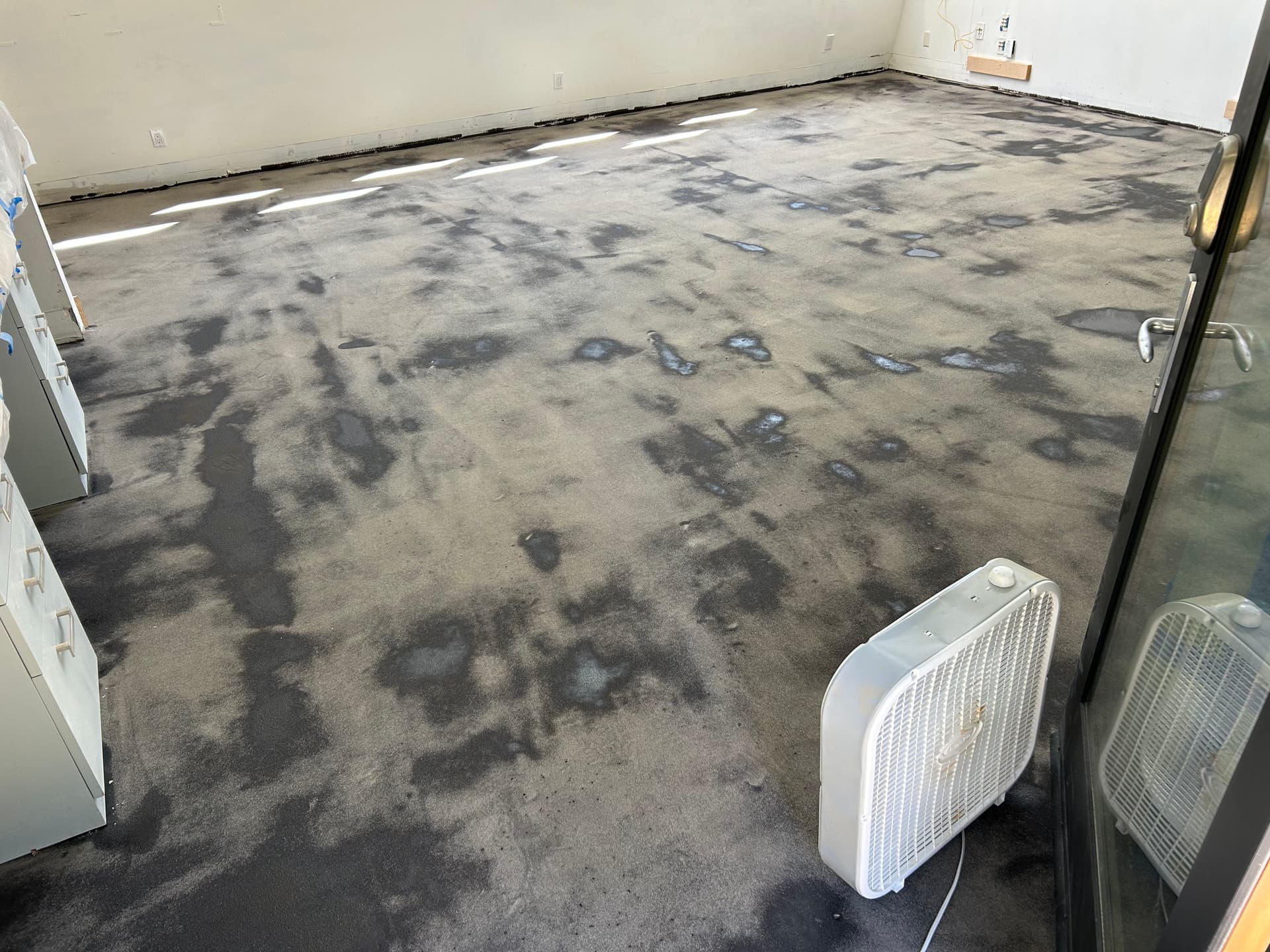
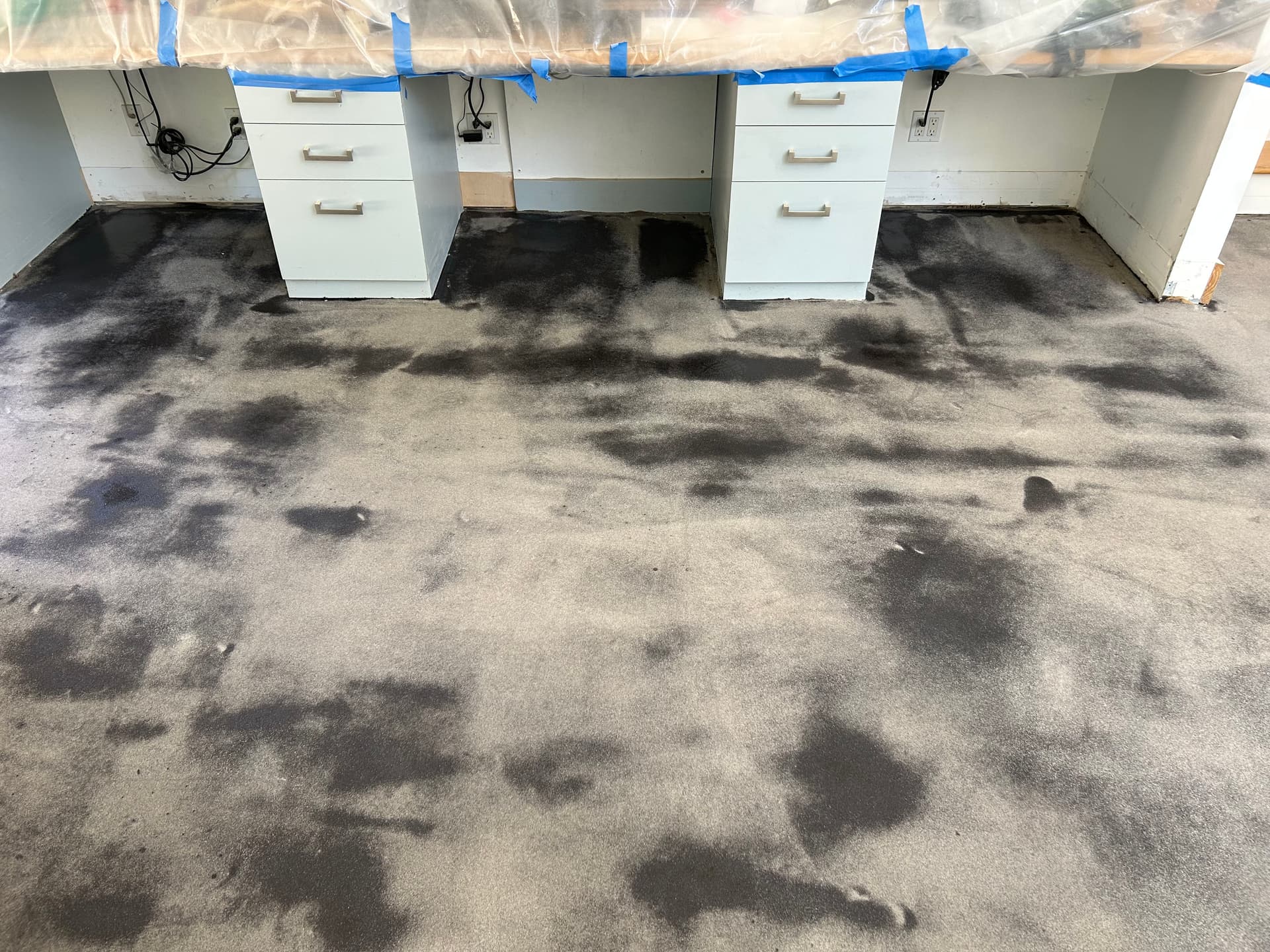
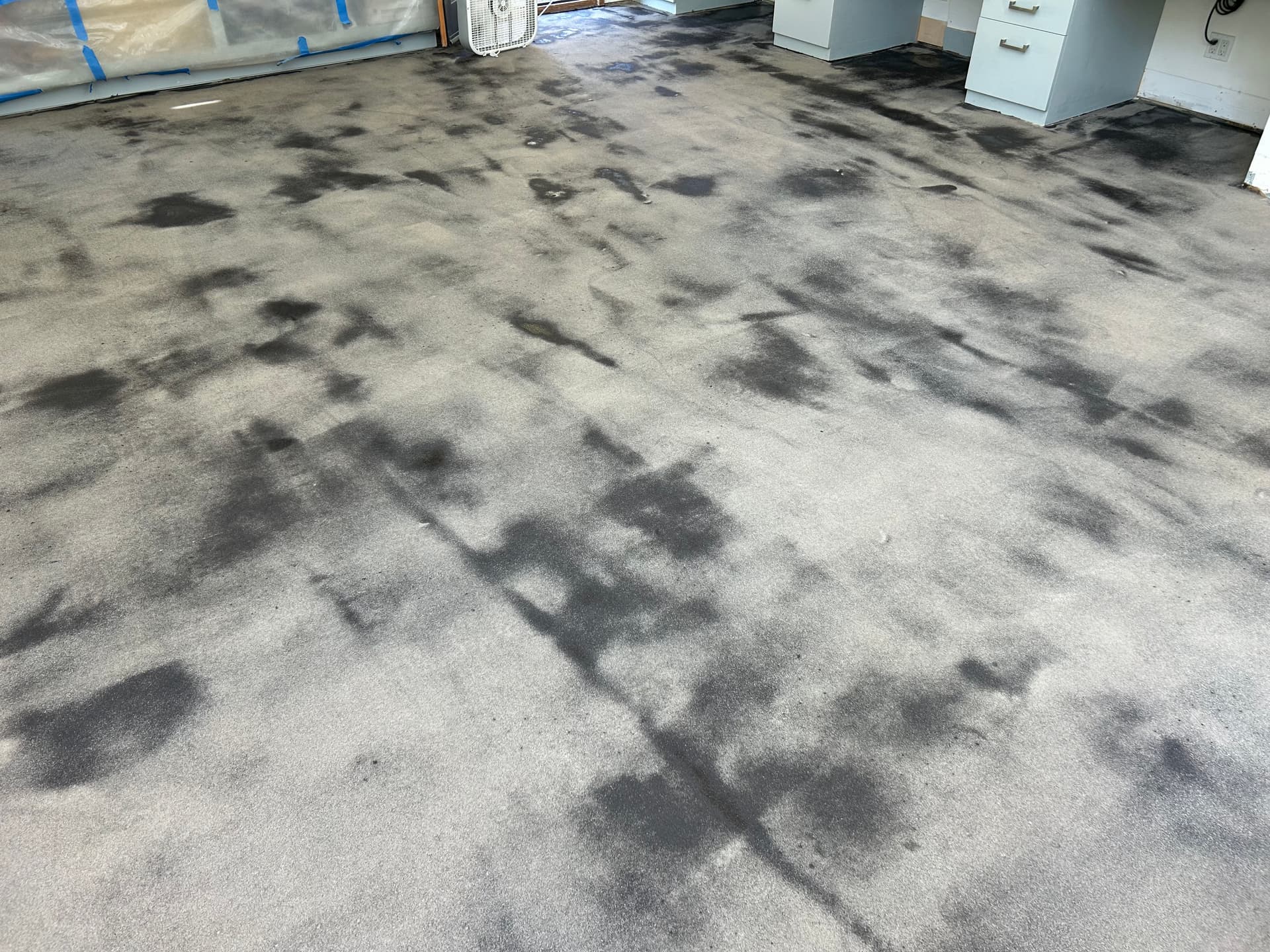
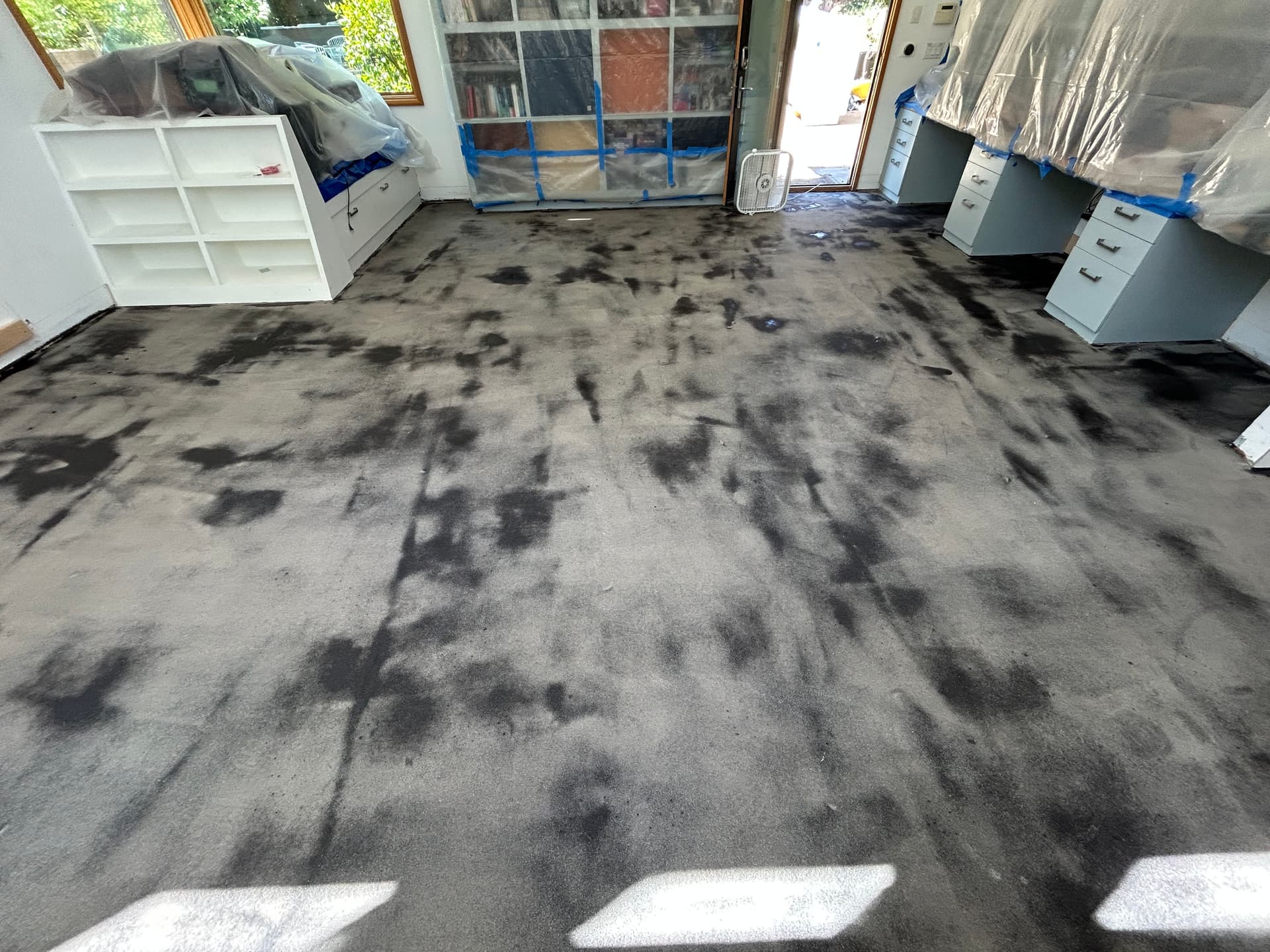
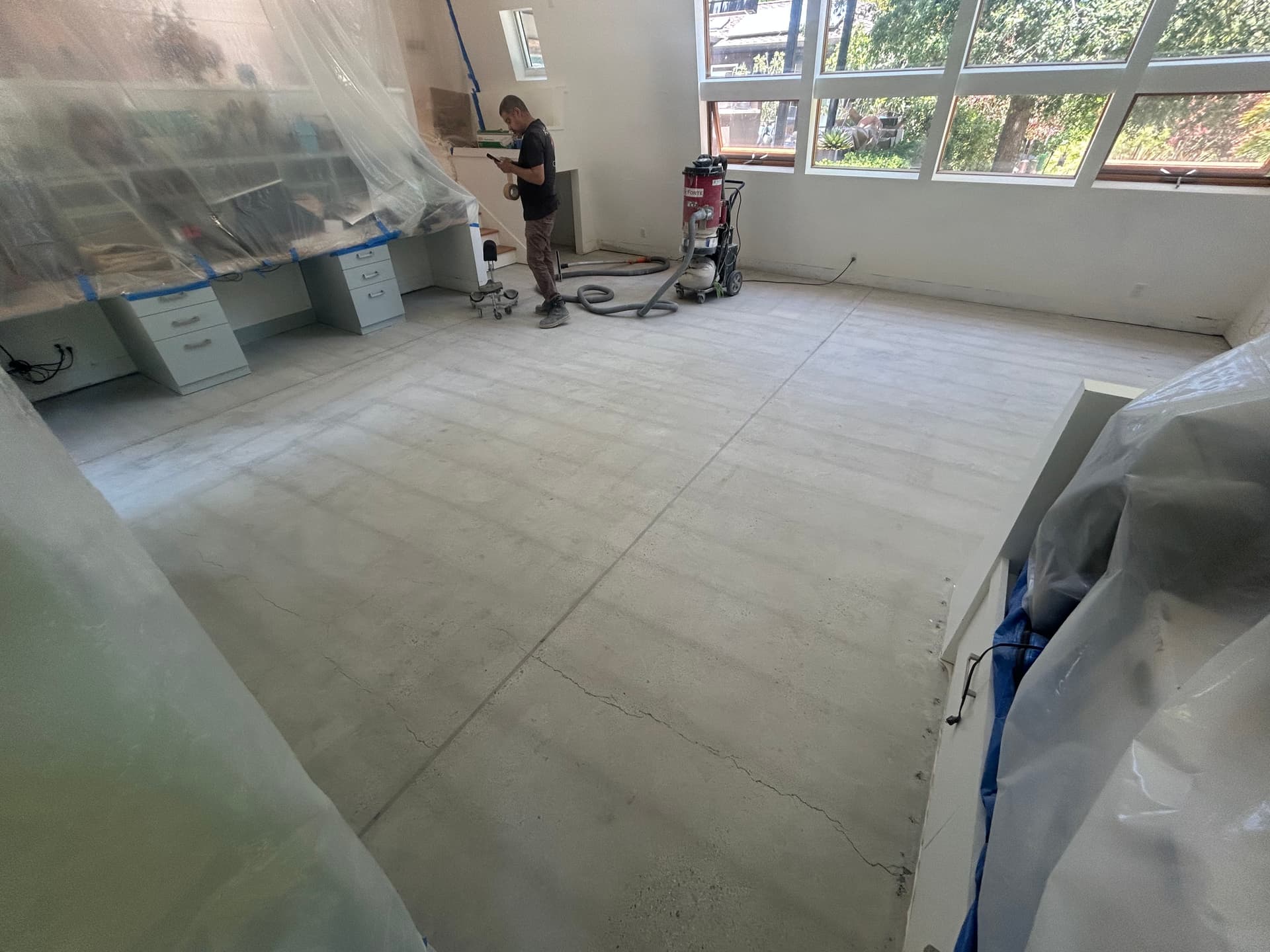
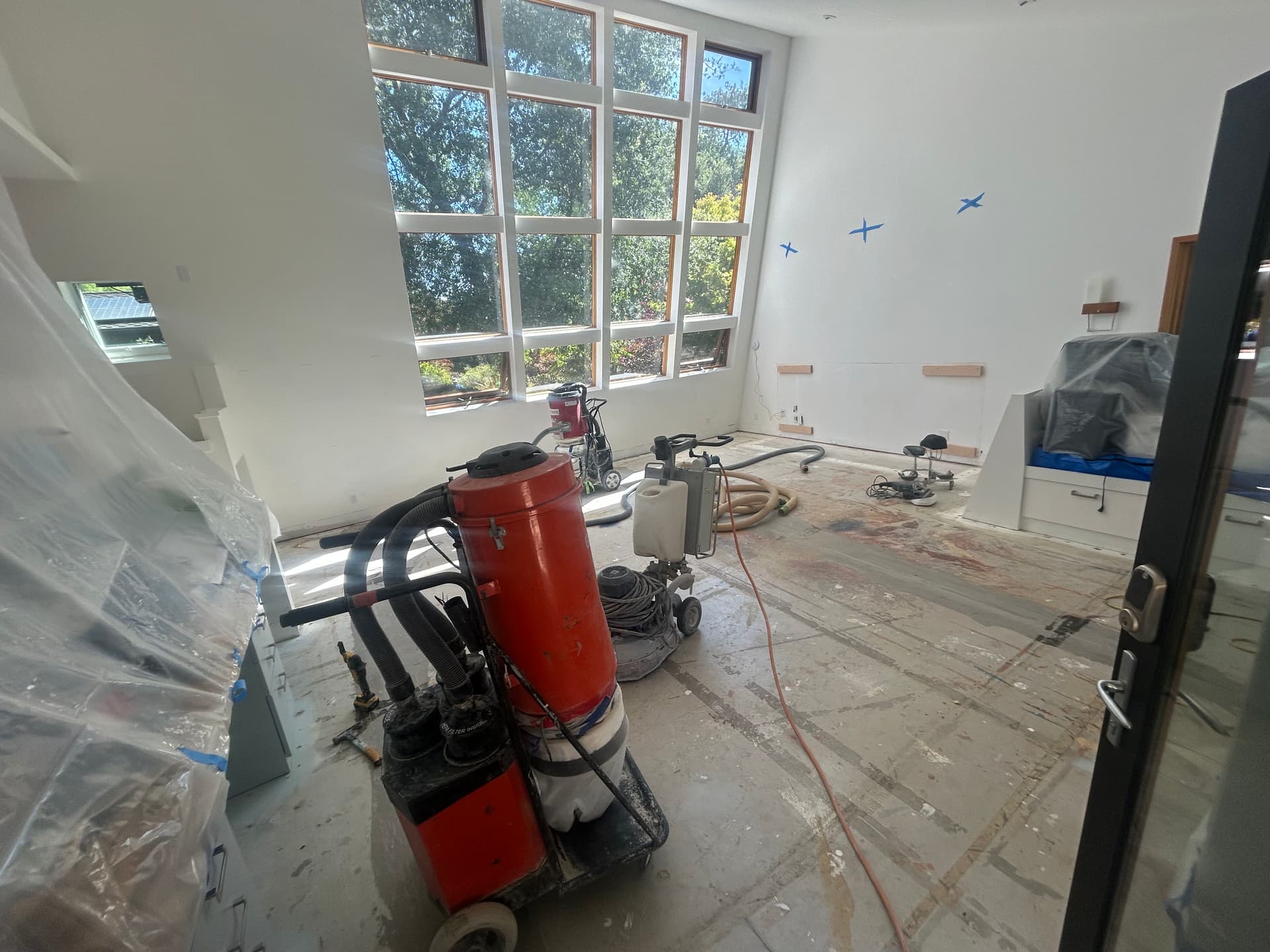
Most flooring failures don't start with bad flooring. They start with bad prep. A slab that wasn't properly ground, tested for moisture, or primed is basically a ticking clock under whatever gets installed on top of it. That's exactly the kind of situation we were walking into here.
The slab had old adhesive residue and surface contamination spread across the entire floor. Before anything else could happen, we brought in the diamond grinders to strip it all back. Concrete grinding opens up the surface at a microscopic level - that's what lets the epoxy primer actually bond instead of just sitting on top. No shortcuts, no skipping steps.
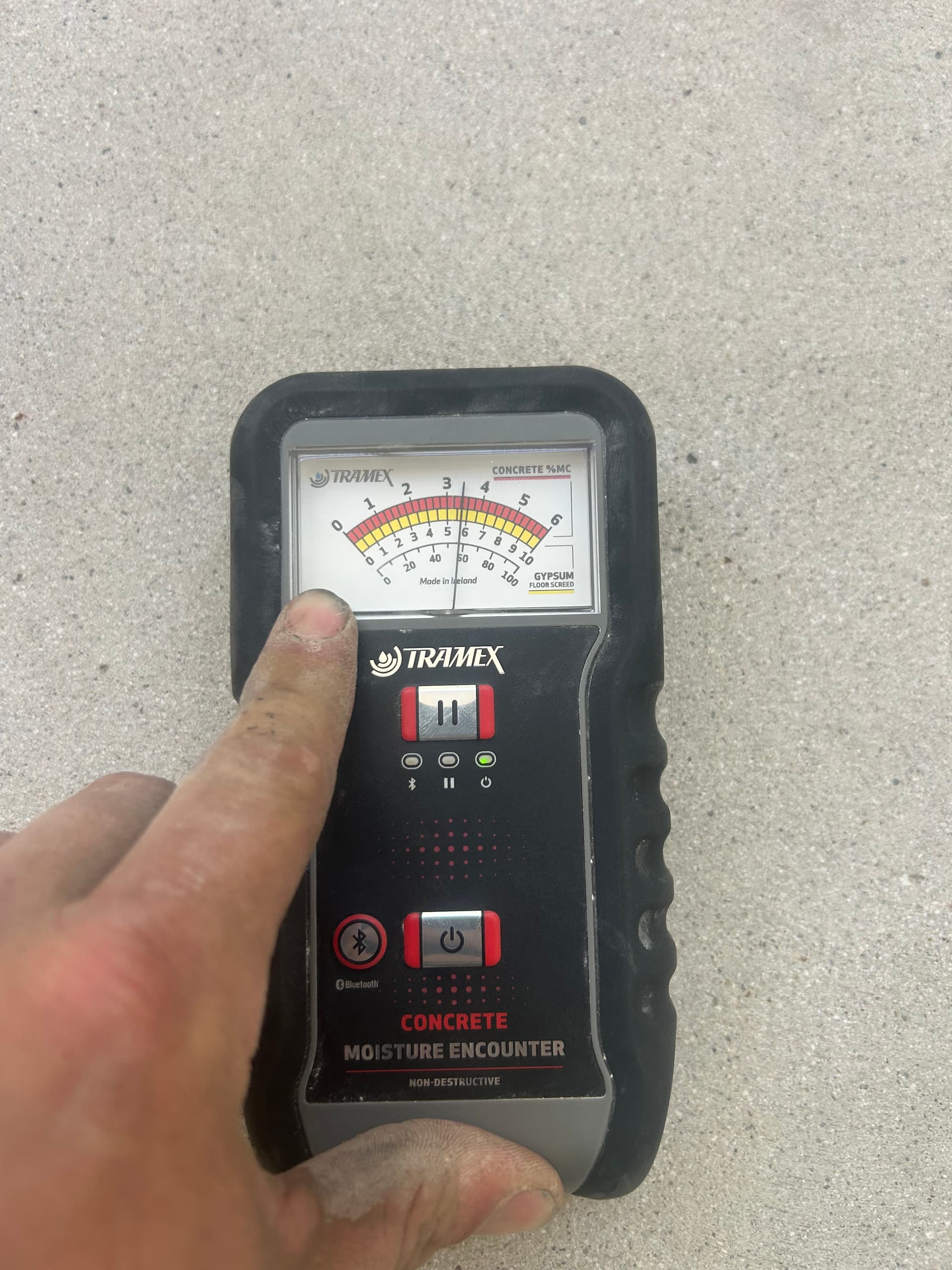
Once the grind was done, we pulled out the Tramex Concrete Moisture Encounter to test the slab. Moisture testing isn't optional on a job like this. Too much moisture vapor pushing up through the slab will destroy a hardwood floor from the bottom up. We check it every time, no exceptions. After the slab passed, we applied Ardex epoxy and finished with a sand broadcast to give the next layer something solid to grip.
The whole point of this process is to set up every layer that comes after it. The hardwood installer gets a clean, profiled, primed surface that's ready to perform. That's what proper concrete prep actually looks like - and it's the difference between a floor that holds up for decades and one that starts failing within a few years.
We do this kind of work because it matters. Concrete grinding, moisture testing, epoxy priming - these aren't upsells. They're the foundation of any floor system that's built to last. If your slab needs to be done right from the start, this is how we do it.