

This site is no longer active!
If you are the owner, you must reactive this site for it to be published again
or contact us at support@rebolthq.com

If you are the owner, you must reactive this site for it to be published again
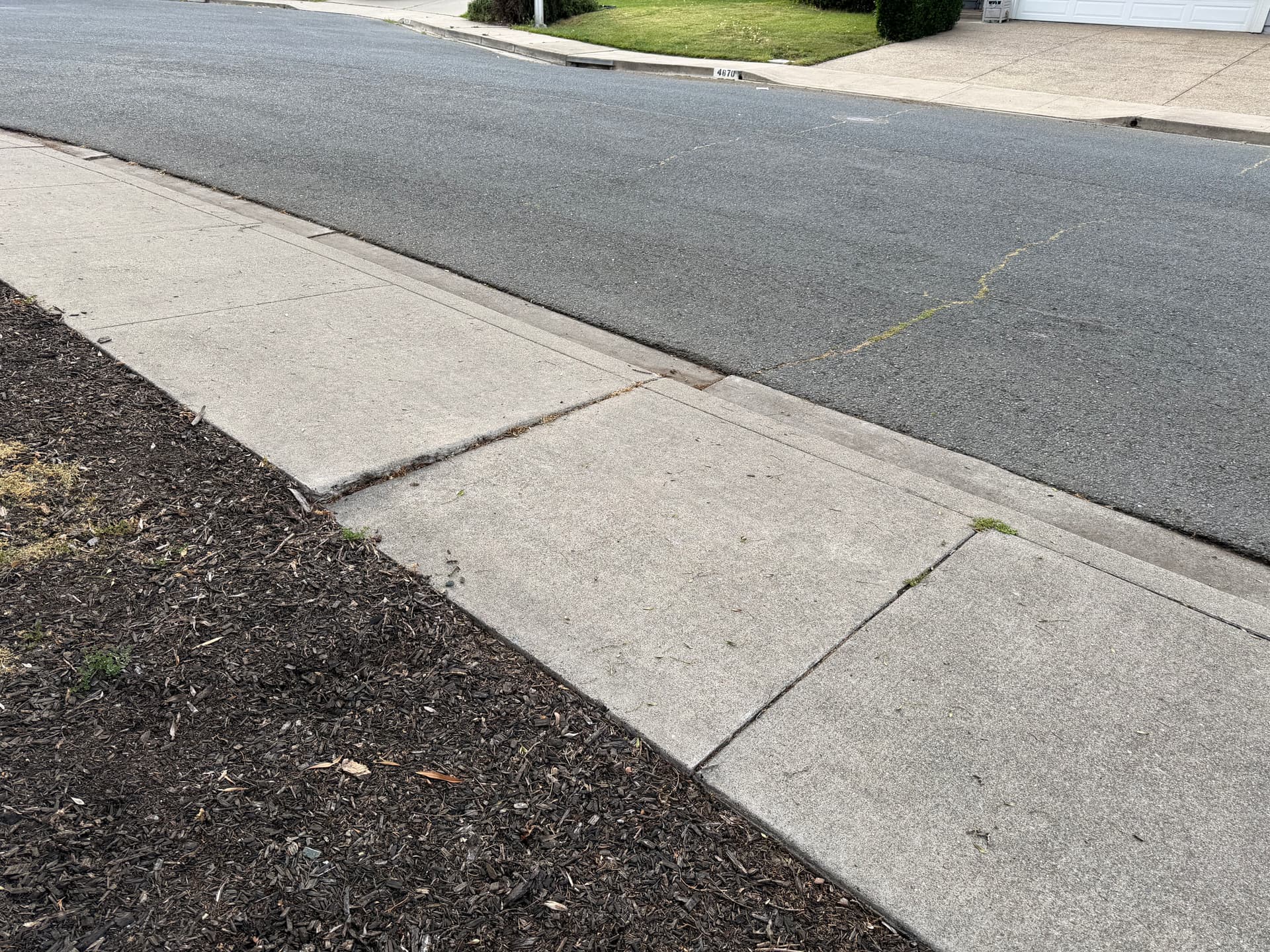
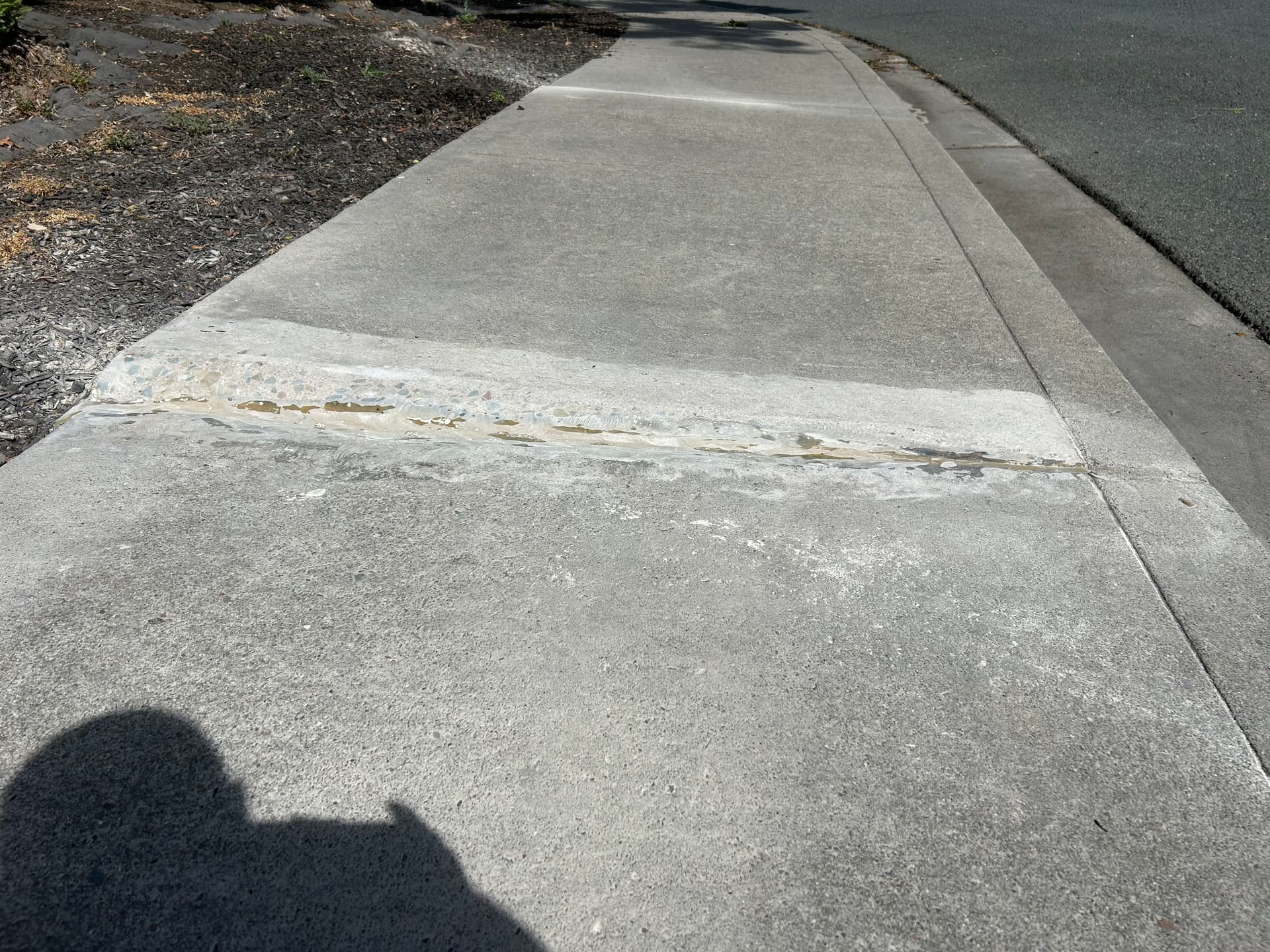
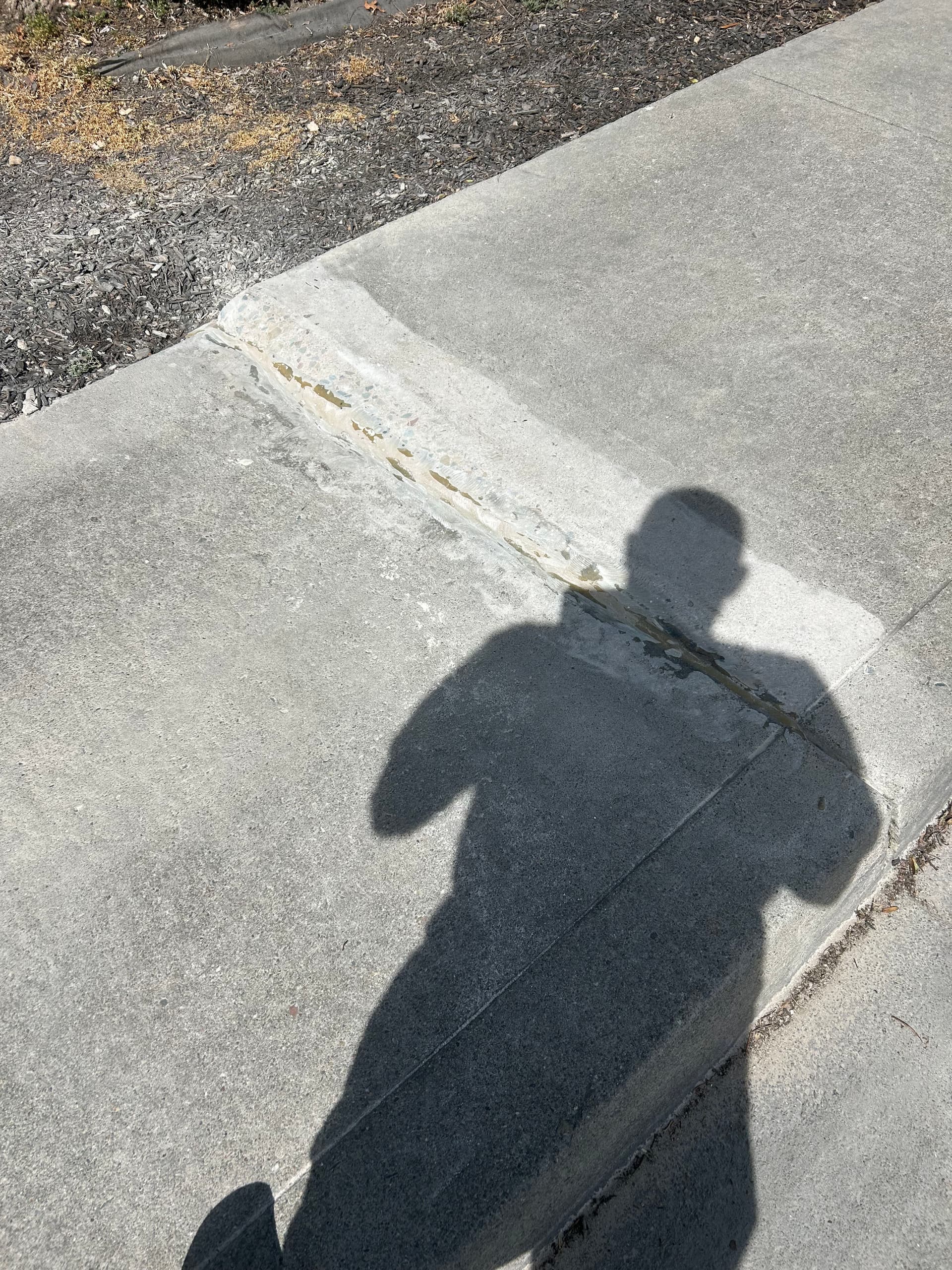
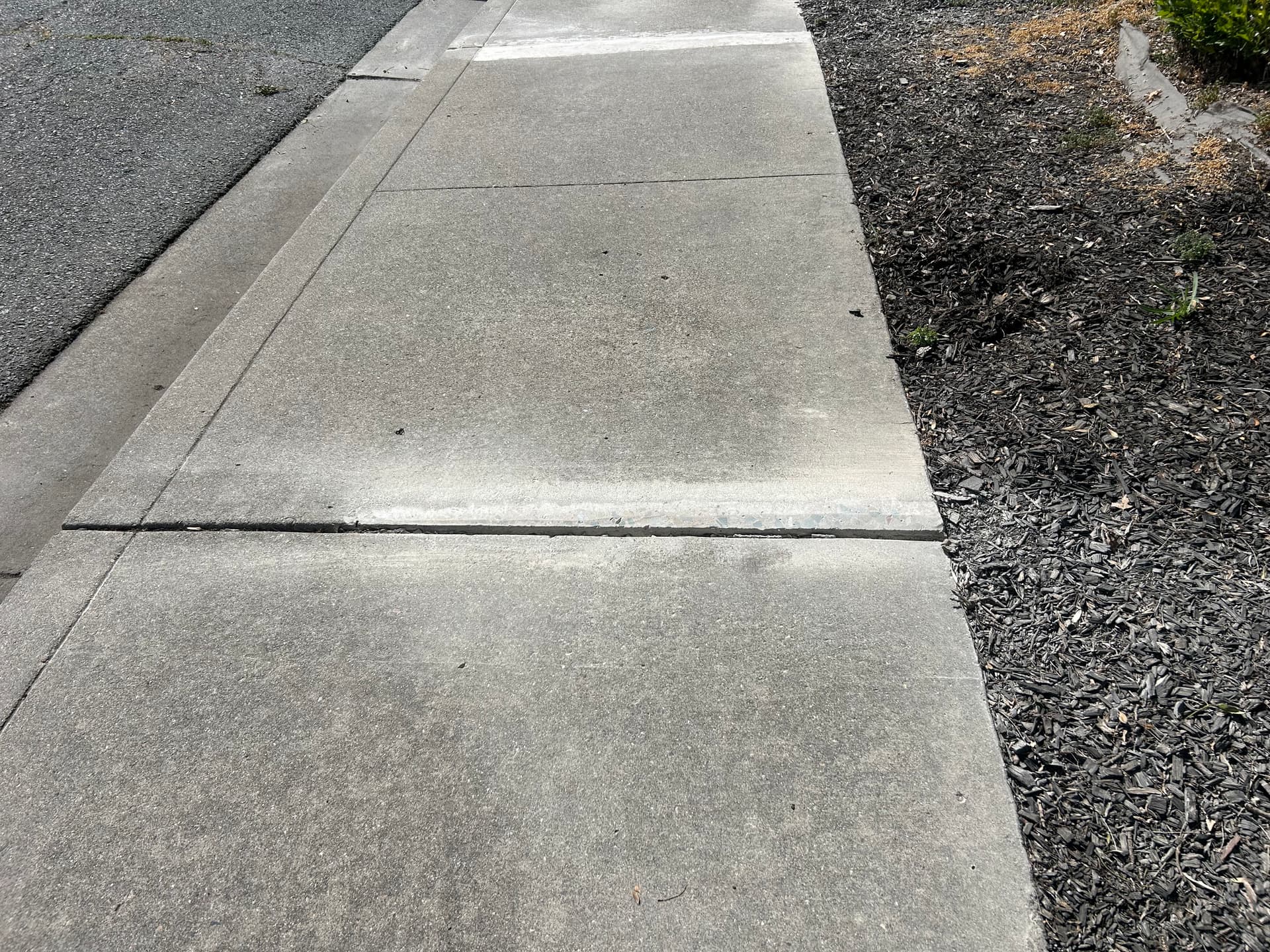
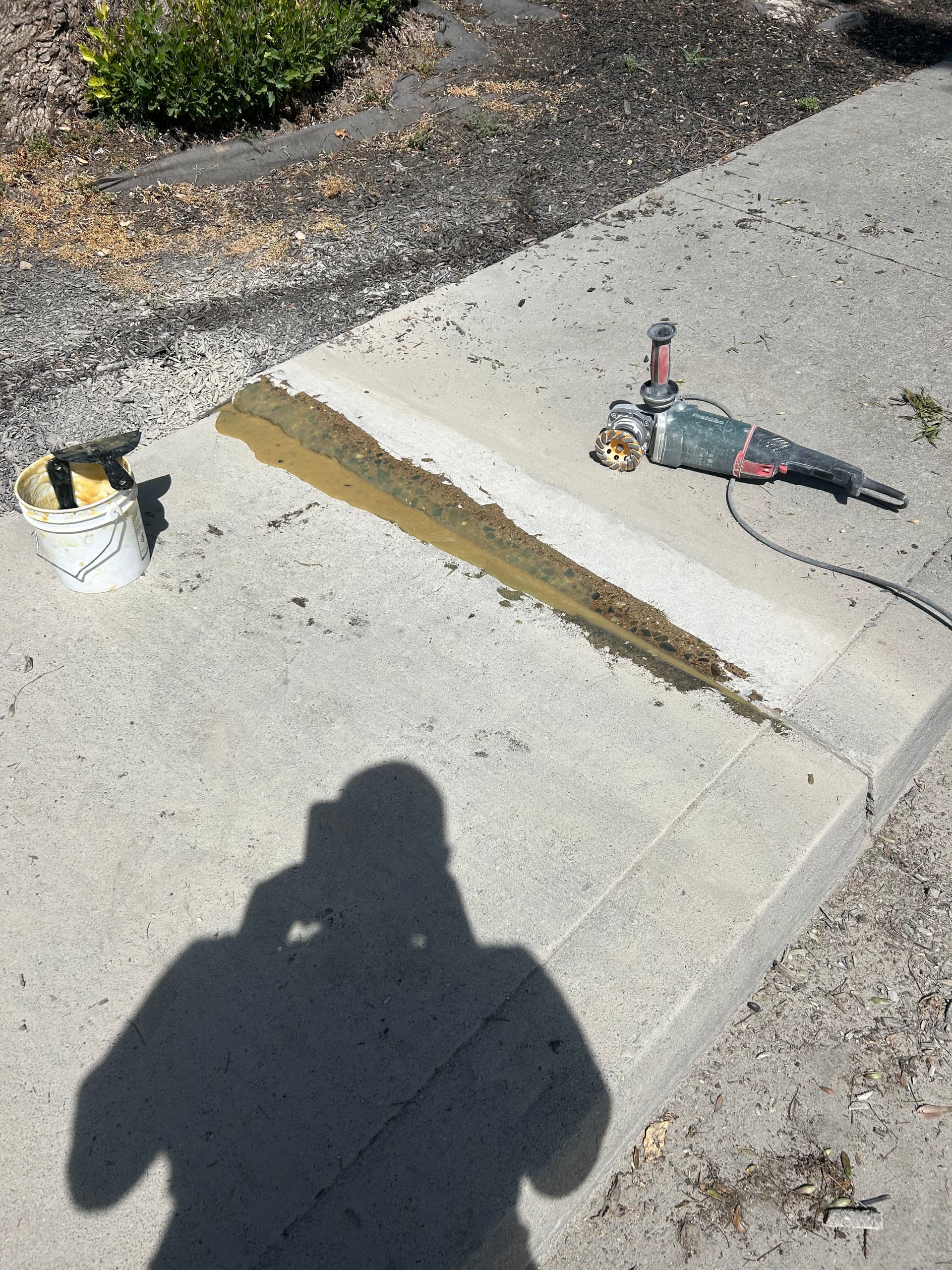
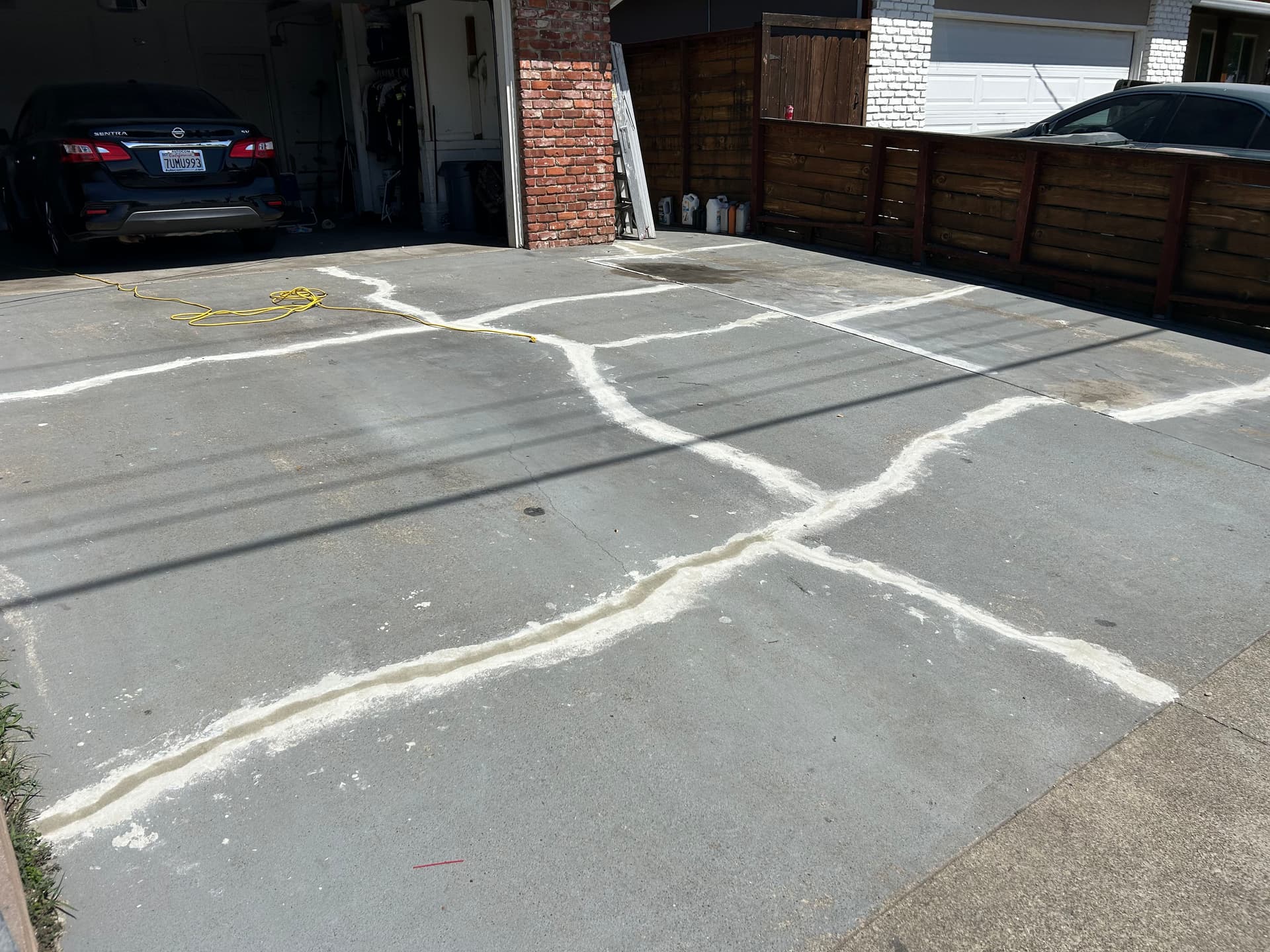
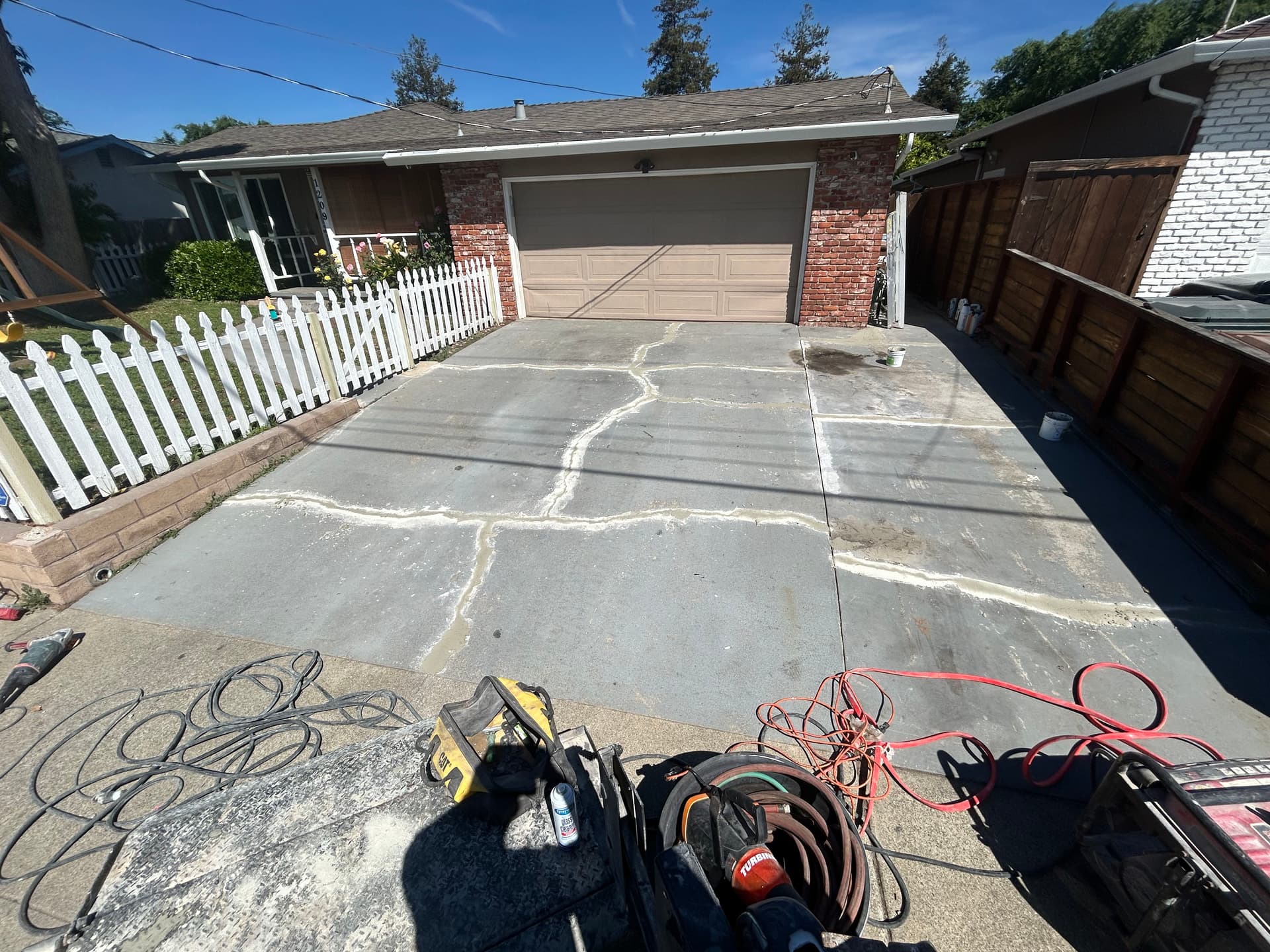
Cracks in concrete don't just look bad - they get worse over time. What starts as a hairline crack can open up, shift, and become a real tripping hazard before you know it. That's exactly the kind of thing we handle, and this job had a few different problem areas that needed attention.
We worked on both sidewalk panels and a driveway that had developed a serious network of cracks running across the surface. On the sidewalk, there was a wide, broken joint between two panels - the kind that catches a shoe or a wheel just right. We ground out the damaged material, cleaned the area down, and packed it with repair filler to bring it back flush and solid. The driveway was a different situation entirely - multiple cracks branching out in different directions, all routed and filled.
The process matters here. You can't just slap filler over a crack and call it done. We use an angle grinder with a crack chaser blade to open the crack cleanly first. That gives the repair material something to bond into, not just sit on top of. It's a detail that separates a repair that lasts from one that pops out in six months.
Every surface we repaired was brought back to a safe, smooth walking and driving surface. No more raised edges. No more open gaps collecting water and debris. Our floor hazard correction work covers everything from small sidewalk joints to full driveway crack systems - whatever the surface needs, we approach it the same way.
If you've got cracked or uneven concrete on your property, those issues don't fix themselves. The longer they sit, the more they spread. Getting them addressed early is almost always the cheaper, easier path.